


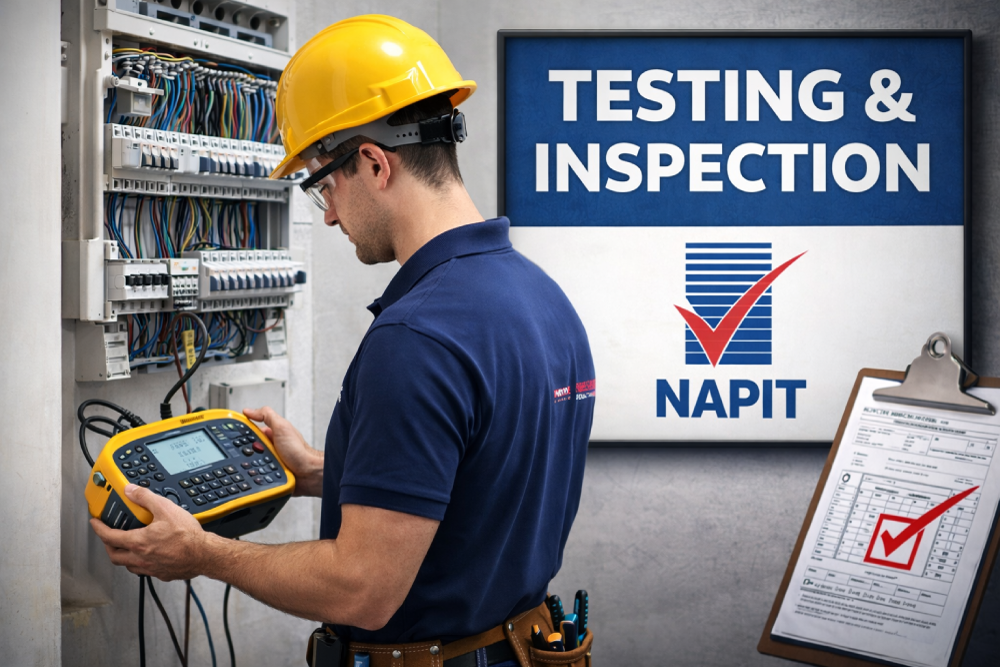
Testing & Inspection
Electrical testing & inspection – what it is, why it matters, and when you need it
Most of us give very little thought to what's happening behind our walls and under our floors. Flick a switch, the light comes on. Plug in a kettle, it boils. As long as everything seems to be working, the electrical installation in a property can go years – sometimes decades – without a second thought.
But “seems to be working” isn't the same as “safe.” Electrical faults are one of the leading causes of house fires in the British Isles, and the vast majority of those faults are invisible to the untrained eye. That's precisely why electrical testing and inspection exists – and why it matters far more than most property owners realise.
What is electrical testing and inspection?
Electrical testing and inspection is a formal, structured assessment of the wiring, circuits, consumer unit (fuse box), and accessories within a property. It's carried out by a qualified electrical engineer and results in an official document called an Electrical Installation Condition Report, or EICR.
The EICR tells you two things: the current condition of your electrical installation, and whether any remedial work is needed. The report classifies findings using a simple coding system:
- C1 – Danger present. This requires immediate action.
- C2 – Potentially dangerous. Remedial work must be carried out urgently.
- C3 – Improvement recommended, but not immediately required.
A satisfactory EICR means your installation has been assessed by a professional and found to be in good condition. An unsatisfactory one doesn't necessarily mean the building is about to burst into flames – but it does mean issues have been identified that need attention.
In addition to the EICR, businesses and landlords also need to consider Portable Appliance Testing (PAT) – a series of checks carried out on any electrical item that can be plugged in and moved around, from desk fans and floor lamps to kettles and power tools. PAT testing ensures that these appliances meet health and safety requirements and aren't putting people at risk.
Why does it matter?
Safety – first, foremost, and always
Electrical installations degrade over time. Insulation becomes brittle. Connections loosen. Circuit breakers wear out. Rodents occasionally make homes inside wall cavities and chew through cables. None of this is visible during normal use, but any of it can result in electric shock, fire, or worse.
An inspection creates a snapshot of your installation's condition at a point in time. It gives you – and anyone else with a stake in the property – documented, professional confidence that the electrics are safe.
Insurance and liability
If a fire or electrical incident occurs and you haven't had your installation inspected at appropriate intervals, you may find yourself in a difficult position with your insurer. Having a current, satisfactory EICR on file is evidence of due diligence. Without it, both homeowners and landlords can face complications with claims – or worse, personal liability.
Peace of mind when buying or selling
Electrical condition is one of the most common concerns raised during property transactions. Buyers increasingly request an EICR before exchange, and sellers who can produce a recent, satisfactory report are in a much stronger position. It removes uncertainty and keeps the process moving.
Compliance with the law – especially for Jersey landlords
This isn't just good practice in Jersey. It's the law.
Since 1st January 2019, Jersey legislation requires that all rented properties must have an electrical safety inspection carried out by a registered engineer – either every five years, or before the start of a new tenancy. Failure to comply isn't simply an administrative issue; it's a legal one.
If you're a landlord in Jersey, this isn't optional. And if you're a tenant, you have the right to know that your home has been inspected.
Book an inspection
If you're not sure when your installation was last inspected, or you need an EICR or PAT testing for a rental property or business premises, get in touch with the team and we'll get it booked in.